


Aluminum Pigment Market Challenges Include Environmental and Regulatory Concerns
- Ajaykumar Patil
- Dec 9, 2025
- 4 min read

Introduction: Understanding the Significance of Aluminum Pigments
The aluminum pigment market plays a crucial role across various industries, especially in automotive coatings, printing inks, plastics, and decorative applications. Known for their metallic shine, superior opacity, and ability to create eye-catching visual effects, aluminum pigments have become an essential raw material for manufacturers looking to enhance product aesthetics and performance. As the demand for visually appealing and functional products increases, industries continue to rely on aluminum-based pigments to differentiate their offerings and meet evolving customer preferences. In addition, technological advancements in metallic coatings and specialty pigments are creating new growth opportunities in emerging sectors.
Market Overview: Current Standing and Future Growth Potential
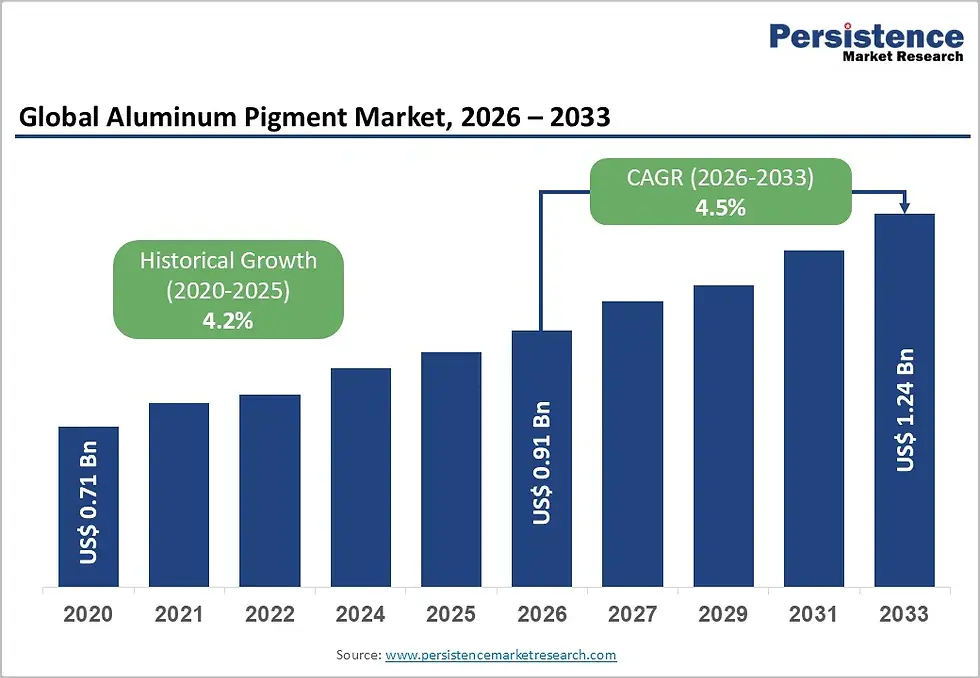
The global aluminum pigment sector is witnessing steady expansion owing to its widespread use in consumer goods, industrial equipment, and transportation. According to a recent report from Persistence Market Research, the aluminum pigment market is valued at US$ 0.91 billion in 2026 and is projected to reach US$ 1.66 billion by 2033. This reflects a stable compound annual growth rate (CAGR) of 4.5% over the forecast period, highlighting the consistent and growing demand for metallic pigments across various industries. The market’s upward trajectory is driven by rising automotive production, booming construction activities, and an increasing focus on high-performance, high-gloss finishes that require aluminum-based additives.
What Are Aluminum Pigments Used For?
Aluminum pigments are primarily used to create metallic effects and improve the visual appeal of coatings, inks, plastics, and decorative materials. In the automotive industry, they help achieve glossy, reflective finishes seen in car exteriors. In printing and packaging, aluminum pigments enhance brand appeal by adding a metallic sheen to labels and printed surfaces. They are also widely used in industrial coatings to improve durability, corrosion resistance, and UV protection. With the rising demand for premium, high-performance finishes, aluminum pigments continue to gain traction in home décor, consumer appliances, and cosmetic packaging applications.
Key Drivers of Market Growth: Why Demand is Rising
The automotive industry remains one of the strongest contributors to the growth of the aluminum pigment market. Metallic paints and coatings are widely used in vehicle exteriors to offer a premium appearance and improved color depth. As automotive production expands in Asia-Pacific, Europe, and North America, the demand for aluminum pigments continues to rise. Additionally, consumer preferences for stylish finishes and customized metallic shades further boost product consumption. Beyond automotive applications, the printing and packaging industry is increasingly adopting aluminum pigments to deliver visually striking product designs that help brands stand out in competitive markets.
Urbanization and industrial expansion are also contributing significantly to market growth. In the construction industry, aluminum pigments are used in architectural coatings, protective paints, and decorative applications to enhance surface strength and appearance. The growing trend of luxury furnishings, interior décor, and metallic-textured surfaces has added to their demand. Furthermore, the plastics industry incorporates aluminum pigments in household items, lifestyle products, and consumer goods to provide metallic effects without compromising material strength and flexibility.
Technological Advancements in Aluminum Pigments
Innovation is one of the driving forces behind the growing adoption of aluminum pigments. Advancements in particle size control, surface treatments, and pigment dispersion technologies have resulted in high-performance pigments with improved durability and enhanced visual effects. Modern aluminum pigments provide better oxidation resistance, making them suitable for long-term outdoor applications. Additionally, manufacturers are developing environmentally friendly pigment solutions that minimize VOC emissions and support sustainability initiatives across industries. These innovations are widening the scope of aluminum pigment applications across automotive, aerospace, electronics, and 3D printing sectors.
The emergence of vacuum metallized pigments (VMPs) is another noteworthy development. These pigments offer superior reflectivity, brighter metallic effects, and excellent hiding power compared to conventional aluminum pigments. Their ability to create mirror-like finishes makes them desirable in premium automotive coatings, luxury packaging, and high-end decorative products. As industries shift toward ultra-modern designs and high-gloss finishes, VMPs are expected to drive substantial growth in the coming years.
Regional Market Insights: Growth Patterns Across the Globe
The Asia-Pacific region dominates the global aluminum pigment market, supported by rapid industrialization, booming automotive production, and expanding manufacturing activities. Countries like China, India, and Japan are leading consumers due to strong demand in construction, consumer goods, and packaging sectors. Europe remains another significant market, driven by its advanced automotive manufacturing base and strong regulatory emphasis on eco-friendly coating materials. The region’s focus on energy-efficient buildings and premium architectural finishes further contributes to market growth.
North America continues to witness steady demand due to its mature automotive, aerospace, and industrial manufacturing industries. The U.S. is a major market for specialty pigments used in high-performance coatings, luxury packaging, and advanced printing applications. Meanwhile, the Middle East & Africa region is emerging as a potential growth hub as construction and infrastructure development accelerate across the region, increasing the need for durable and aesthetically appealing coatings that incorporate aluminum pigments.
Challenges and Market Restraints
Despite steady growth, the aluminum pigment market faces several challenges. One of the primary concerns is rising raw material costs, particularly aluminum flakes, which can significantly affect production expenses. Environmental regulations surrounding metallic pigments and VOC emissions also pose hurdles for manufacturers, compelling them to invest in cleaner technologies and sustainable materials. Additionally, fluctuations in automotive sales and global shipping disruptions can temporarily impact the demand for aluminum-based pigments. However, continuous innovation and the expansion of eco-friendly alternatives are helping the industry navigate these challenges effectively.
Future Outlook: Opportunities in Innovation and Sustainability
The future of the aluminum pigment market looks promising as industries increasingly lean toward metallic accents, premium finishes, and durable coatings. Growing adoption of electric vehicles, advancements in architectural coatings, and the rise of smart packaging solutions present significant opportunities for pigment manufacturers. The shift toward sustainability will play a critical role as companies invest in environmentally friendly aluminum pigments with lower carbon footprints and improved recyclability. Moreover, digital printing and additive manufacturing (3D printing) are emerging as new avenues for pigment application, giving manufacturers additional expansion opportunities.
Conclusion: A Market Poised for Steady Expansion
The aluminum pigment market is set for continued growth as industries across automotive, construction, packaging, and consumer goods embrace premium metallic finishes and versatile color effects. With a market value expected to rise from US$ 0.91 billion in 2026 to US$ 1.66 billion by 2033 at a CAGR of 4.5%, the sector is poised for steady expansion. As innovation, sustainability, and advanced manufacturing converge, aluminum pigments will remain essential to enhancing visual appeal and improving material performance across diverse industries.
Explore the Latest Trending Research Reports:


Comments