


Compostable Pouch Market Sees Expanding Applications Across Industries
- Ajaykumar Patil
- Oct 6, 2025
- 5 min read

Introduction: The Rise of Eco-Friendly Packaging Solutions
As global awareness of environmental sustainability continues to rise, industries across the world are shifting toward eco-conscious packaging alternatives. Traditional plastic packaging, which has long dominated the market, is increasingly being replaced by biodegradable and compostable materials that offer a sustainable end-of-life solution. Among these innovations, compostable pouches have emerged as one of the most promising packaging options, combining functionality, durability, and environmental responsibility. Their growing use across food, beverage, personal care, and pharmaceutical industries highlights a significant transformation in the global packaging landscape.
Market Overview: Strong Growth in Sustainable Packaging Demand
The compostable pouch market is witnessing rapid expansion as businesses and consumers alike prioritize sustainability. With the increasing push for reducing plastic waste, compostable pouches provide an eco-friendly alternative that can decompose into natural elements without leaving behind harmful residues. These pouches are primarily made from renewable plant-based materials such as cornstarch, polylactic acid (PLA), and cellulose, making them ideal for brands committed to minimizing environmental footprints.
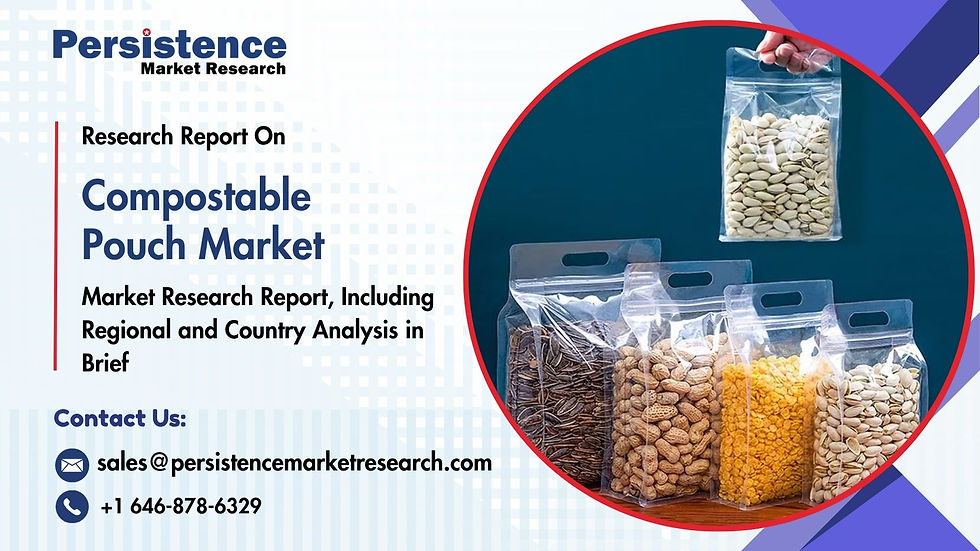
According to a recent report by Persistence Market Research, the global compostable pouch market is forecast to expand at a CAGR of 5.4% and thereby increase from an estimated value of US$ 238 million in 2024 to US$ 344 million by the end of 2031. This projected growth reflects the rising consumer demand for sustainable packaging options and the adoption of circular economy principles by major global companies. The growing number of eco-conscious startups, combined with strict government regulations against single-use plastics, continues to accelerate the shift toward compostable pouch solutions worldwide.
What is driving the demand for compostable pouches in the global packaging market?
The growing demand for compostable pouches is primarily driven by increasing environmental concerns, stricter government regulations, and evolving consumer preferences for sustainable packaging. As awareness of plastic pollution intensifies, consumers are actively choosing eco-friendly packaging that aligns with their values. Brands, in turn, are investing in compostable pouches to strengthen their sustainability profiles and meet regulatory requirements. Additionally, advances in biopolymer technology have made compostable pouches more durable, versatile, and cost-effective, expanding their use across various industries, including food, beverages, and personal care products. This convergence of innovation and responsibility is fueling strong global demand.
Get a Sample PDF Brochure of the Report (Use Corporate Email ID for a Quick Response): https://www.persistencemarketresearch.com/samples/34306
Key Market Drivers: Environmental Policies and Consumer Awareness
Government initiatives promoting eco-friendly materials are one of the strongest drivers of the compostable pouch market. Countries across Europe, North America, and parts of Asia have introduced stringent regulations restricting plastic packaging. These policies have compelled manufacturers and retailers to explore sustainable packaging alternatives like compostable pouches.
At the same time, consumer awareness of environmental degradation and plastic waste has reached new heights. Modern shoppers, particularly millennials and Gen Z, prefer products with minimal ecological impact and are willing to pay more for sustainable packaging. This behavioral shift is reshaping marketing strategies and influencing brand loyalty across global markets.
The food and beverage industry, in particular, has become a significant adopter of compostable pouches. With an increasing focus on clean-label and organic products, brands in this sector are switching to compostable materials to align their packaging with their sustainability goals. Similarly, the personal care and healthcare industries are incorporating compostable pouches to meet growing consumer expectations for eco-conscious packaging.
Technological Advancements: Shaping the Future of Compostable Packaging
Innovation is at the core of the compostable pouch market’s success. Manufacturers are investing heavily in research and development to improve material performance and expand application versatility. Advances in biopolymers, including PLA and polyhydroxyalkanoates (PHA), have significantly enhanced the barrier properties and mechanical strength of compostable pouches. These materials now offer protection against moisture, oxygen, and UV exposure—critical features for maintaining product freshness and quality.
Moreover, improvements in composting technologies and industrial composting facilities are enabling faster degradation of these materials, supporting a more circular packaging economy. New printing technologies also allow brands to achieve high-quality graphics on compostable films, ensuring that sustainability does not compromise aesthetics or brand visibility.
Regional Insights: Europe and North America Lead, Asia Pacific Rising
Geographically, Europe dominates the global compostable pouch market, thanks to progressive environmental regulations and early adoption of sustainable packaging practices. The European Union’s directives to reduce plastic waste and promote compostable materials have created a highly favorable market environment. Countries such as Germany, France, and the Netherlands are at the forefront of this shift, driving innovation and demand in the region.
North America follows closely, with the United States and Canada embracing compostable solutions due to growing consumer activism and corporate sustainability initiatives. Large retail chains and food service providers are increasingly adopting compostable packaging to align with their carbon reduction commitments.
In the Asia Pacific region, the market is poised for rapid growth as emerging economies like India, China, and Japan implement policies to curb plastic pollution. The region’s booming food and beverage industry, combined with expanding e-commerce channels, is further contributing to the demand for eco-friendly packaging solutions such as compostable pouches.
Market Challenges: Balancing Cost and Performance
Despite its positive growth trajectory, the compostable pouch market faces certain challenges. The production cost of compostable materials remains higher than traditional plastics, primarily due to limited raw material availability and complex manufacturing processes. This cost differential can make adoption difficult for small and medium enterprises (SMEs) in price-sensitive markets.
Another challenge lies in the lack of standardized composting infrastructure. While industrial composting facilities are expanding, many regions still lack the systems needed to process compostable materials efficiently. As a result, compostable pouches may sometimes end up in landfills, where their degradation process slows significantly.
Educating consumers about proper disposal practices also remains a challenge. Without clear labeling and accessible composting options, many consumers may inadvertently dispose of compostable packaging inappropriately, undermining its environmental benefits.
Future Opportunities: The Path Toward a Circular Economy
Looking ahead, the compostable pouch market is set to benefit from innovations in material science, expanding industrial composting infrastructure, and stronger global commitments to sustainability. Companies are actively exploring hybrid solutions that combine compostable materials with renewable energy sources and smart labeling technologies.
As the circular economy model gains momentum, businesses are rethinking their entire value chains—from raw material sourcing to end-of-life disposal. Compostable pouches fit perfectly within this framework, offering both environmental and branding advantages. Emerging economies, in particular, present significant opportunities for growth as local governments and startups collaborate to introduce affordable compostable packaging solutions.
Moreover, the integration of compostable pouches with digital features such as QR codes or blockchain-based tracking could further enhance transparency and traceability in sustainable packaging. This could strengthen brand trust and attract environmentally conscious consumers seeking authenticity and accountability.
Conclusion: A Sustainable Revolution in Packaging
The compostable pouch market is not merely a trend—it represents a long-term shift toward responsible consumption and sustainable production. With an estimated growth from US$ 238 million in 2024 to US$ 344 million by 2031 at a CAGR of 5.4%, the market stands at the forefront of the global movement to replace single-use plastics with eco-friendly alternatives.
As regulatory frameworks tighten and consumer awareness deepens, compostable pouches are expected to become a mainstream packaging solution across multiple industries. Though challenges such as cost and infrastructure persist, ongoing innovations, government support, and collective action from brands and consumers alike are paving the way for a greener, cleaner, and more sustainable packaging future.
Explore the Latest Trending Research Reports:


Comments