


Electric Motor Insulation Material Market Revenue Boosted by Infrastructure Development
- Ajaykumar Patil
- Dec 22, 2025
- 5 min read

Introduction: The Backbone of Electric Motor Performance
Electric motors are at the heart of modern industrial operations, transportation systems, and consumer appliances. From electric vehicles and HVAC systems to industrial machinery and household electronics, electric motors enable efficient energy conversion. A critical yet often overlooked component of these motors is insulation material. Electric motor insulation materials play a vital role in protecting windings from electrical, thermal, and mechanical stresses, thereby ensuring efficiency, safety, and long service life. As electrification accelerates across industries, the electric motor insulation material market is gaining increasing strategic importance.
Market Overview: Size, Growth, and Revenue Outlook
The electric motor insulation material market is witnessing steady growth, driven by rising demand for energy-efficient motors and the rapid expansion of electric mobility and industrial automation. According to a Persistence Market Research report, the global electric motor insulation material market is likely to be valued at around US$ 3.1 billion in 2026. Over the forecast period, the market is expected to expand significantly, reaching approximately US$ 4.8 billion by 2033. This growth reflects a compound annual growth rate (CAGR) of 6.4%, highlighting consistent demand across automotive, industrial, and electronics sectors as manufacturers increasingly prioritize reliability, thermal resistance, and long-term performance.
What Are Electric Motor Insulation Materials and Why Are They Important?
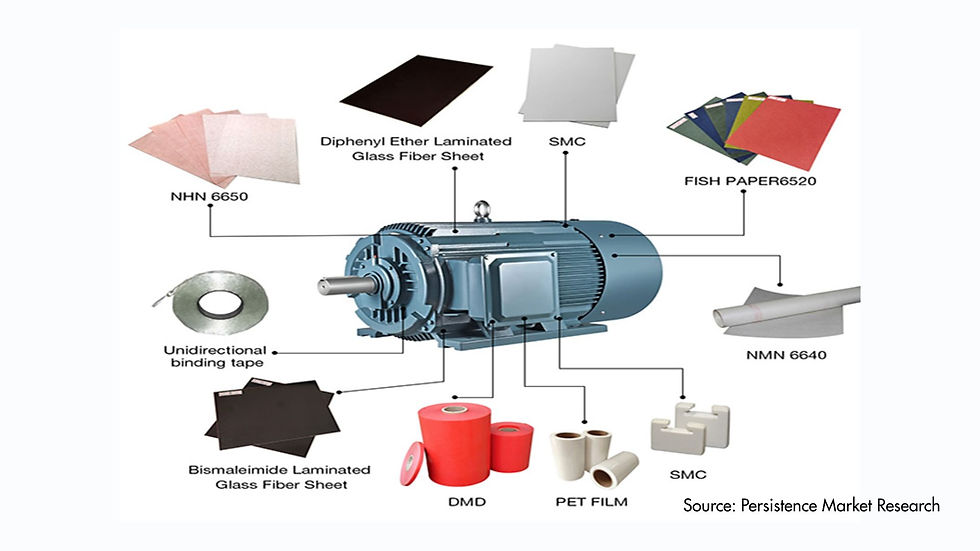
Electric motor insulation materials are designed to electrically isolate conductive components within a motor while withstanding high temperatures, vibration, moisture, and chemical exposure. These materials prevent short circuits, reduce energy losses, and enhance operational safety. Common insulation materials include resins, varnishes, laminates, films, fibers, and advanced composites, each selected based on voltage class, operating temperature, and application environment. As motors are required to operate at higher speeds and power densities, especially in EVs and industrial systems, the demand for advanced insulation solutions continues to rise.
Get Your FREE Sample Report Instantly – Click Now
Why Is Electric Motor Insulation Material Critical for EV and Industrial Motors?
Electric motor insulation material is critical for EV and industrial motors because it directly impacts efficiency, safety, and durability. In electric vehicles, motors operate at high voltages and temperatures, making insulation essential to prevent electrical breakdown, thermal degradation, and performance losses. Advanced insulation materials enable compact motor designs, higher power density, and longer battery range. In industrial motors, insulation ensures continuous operation under heavy loads, reducing downtime and maintenance costs. As industries move toward electrification and energy efficiency, high-performance insulation materials become a strategic enabler of reliability and compliance with global efficiency standards.
Key Growth Drivers: Electrification and Energy Efficiency
One of the primary drivers of the electric motor insulation material market is the global shift toward electrification. The rapid adoption of electric vehicles, renewable energy systems, and industrial automation has significantly increased demand for efficient and durable electric motors. Governments worldwide are implementing stricter energy-efficiency regulations, pushing manufacturers to adopt high-performance motors that rely on advanced insulation materials.
Another important growth factor is industrial modernization. Industries such as manufacturing, construction, and electronics are increasingly using automated systems and robotics, all of which depend on electric motors. This trend directly fuels demand for insulation materials that can withstand higher thermal and mechanical stress while maintaining electrical integrity over long operational cycles.
Technological Advancements in Insulation Materials
Technological innovation is reshaping the electric motor insulation material landscape. Manufacturers are developing high-temperature-resistant materials, such as polyimide films, epoxy resins, and advanced composites, to meet the needs of modern high-speed and high-voltage motors. Improved insulation systems also support reduced motor size and weight, which is particularly important in aerospace, automotive, and portable electronics applications.
Additionally, sustainability is influencing material development. There is growing interest in environmentally friendly insulation materials with lower environmental impact, improved recyclability, and reduced volatile organic compound emissions. These innovations are helping manufacturers balance performance requirements with sustainability goals.
Market Segmentation: Diverse Products and Applications
By product type, the market includes conical, cylindrical, spherical, custom-shaped, domes, and hemispherical components, reflecting the varied design requirements of electric motor systems. Each product type is engineered to fit specific motor architectures and performance needs.
By material, the market covers aluminum spinning products, steel spinning products, stainless steel spinning products, copper spinning products, and other specialized materials. These materials are selected based on thermal conductivity, mechanical strength, corrosion resistance, and compatibility with insulation systems.
By application, electric motor insulation materials are widely used across automotive, aerospace & defense, electronics, construction, and other industries. The automotive sector, particularly electric and hybrid vehicles, represents a major growth area, while aerospace and electronics demand high-reliability insulation for critical systems.
Regionally, the market spans North America, Europe, East Asia, South Asia & Oceania, Latin America, and the Middle East & Africa. East Asia leads due to strong manufacturing bases and high EV production, while Europe and North America benefit from advanced technology adoption and stringent efficiency standards.
Competitive Analysis: Industry Landscape and Key Players
The electric motor insulation material market is moderately competitive, with established manufacturers and specialized suppliers focusing on product innovation, quality, and customization. Key companies operating across related metal spinning and component manufacturing domains include CITIC Dicastal Wheel Manufacturing, Standex ETG, Samuel Metal Spinners, Wenzel Metal Spinning, Helmut Rübsamen (INDUS Holding), Enkei Wheels, Yueling Wheels, Zhejiang Wanfeng Auto Wheel, CGR International, Woodland Metal Spinning, EIBEN s.r.o, Century Metal Spinning, and Leifeld Metal Spinning. These companies leverage advanced manufacturing techniques, global supply chains, and long-term partnerships with OEMs to maintain competitive positioning.
Regional Insights: Opportunities Across Global Markets
Asia Pacific, particularly East Asia, dominates the market due to high production of electric motors, rapid industrialization, and strong EV manufacturing ecosystems. Europe follows closely, supported by strict environmental regulations and a strong focus on energy efficiency. North America remains a key market, driven by industrial automation and growing investments in electric mobility. Emerging regions such as South Asia, Latin America, and the Middle East & Africa offer long-term growth potential as infrastructure development and electrification initiatives expand.
Future Outlook: A Market Aligned with Electrification Trends
The future of the electric motor insulation material market is closely tied to global electrification trends. As electric vehicles, renewable energy systems, and smart manufacturing continue to grow, demand for high-performance insulation materials will rise steadily. With the market projected to grow from US$ 3.1 billion in 2026 to US$ 4.8 billion by 2033 at a CAGR of 6.4%, manufacturers that invest in innovation, sustainability, and application-specific solutions are well-positioned to capitalize on emerging opportunities.
Conclusion: A Critical Enabler of Modern Electric Systems
Electric motor insulation materials are fundamental to the performance, efficiency, and safety of electric motors across industries. As technology advances and electrification accelerates, these materials will play an increasingly strategic role. Supported by steady market growth, technological progress, and expanding applications, the electric motor insulation material market is set to remain a vital component of the global industrial and mobility ecosystem.
Explore the Latest Trending Research Reports:


Comments