


Silica Flour Market Development Supported by Sustainable Mining Practices
- Ajaykumar Patil
- Nov 17, 2025
- 4 min read

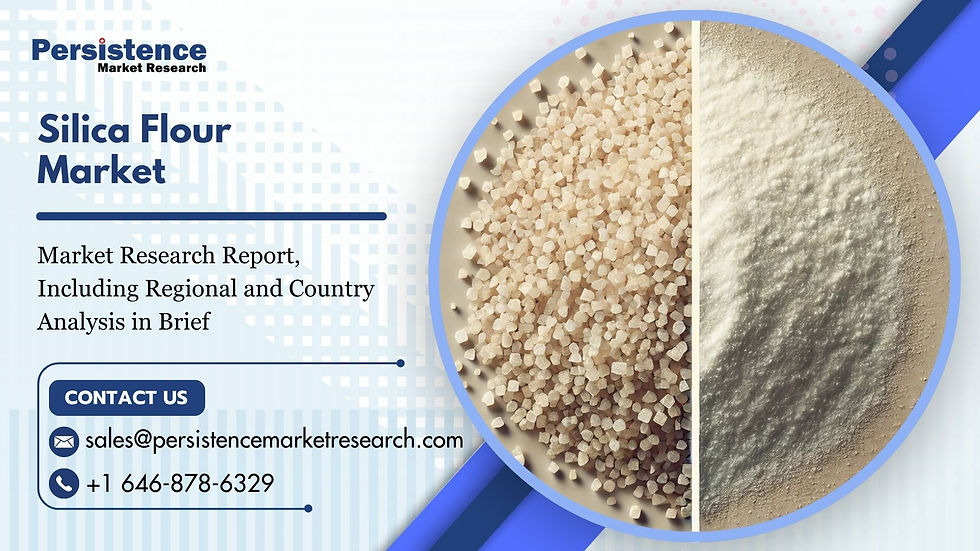
Introduction: Understanding the Growing Importance of Silica Flour
The global demand for high-performance industrial materials has grown rapidly over the past decade, and silica flour has emerged as a key component driving advancements across numerous industries. Known for its exceptional purity, chemical stability, and fine particle size, silica flour is used extensively in applications such as fiberglass, sodium silicate production, ceramics, foundry work, paints and coatings, sealants, and industrial filtration. As industries continue to prioritize efficiency, durability, and quality, silica flour has become an essential ingredient in manufacturing processes worldwide.
Market Overview: A Steady Path of Growth
The silica flour market has shown strong growth momentum thanks to rising consumption in construction, automotive, chemical processing, and electronics manufacturing. The growing awareness of high-performance materials, coupled with the need for durable reinforcing agents, has propelled the use of silica flour across developed and emerging regions. According to the Persistence Market Research report, the global silica flour market size was valued at US$ 0.78 billion in 2025. The market is expected to expand steadily and reach approximately US$ 1.13 billion by 2032, reflecting a compound annual growth rate (CAGR) of 5.5% from 2025 to 2032. This sustained growth trajectory highlights the increasing reliance on silica flour as a critical industrial raw material.
What Are the Top Applications Driving Demand in the Silica Flour Market?
One of the most common questions among industry professionals is: What are the top applications driving global demand in the silica flour market? The primary demand comes from fiberglass manufacturing, where silica flour enhances strength, thermal resistance, and structural integrity. Additionally, the ceramics industry relies heavily on silica flour as a key ingredient in glazes, tiles, and sanitaryware. Its usage in construction chemicals, such as grout, cement fillers, and adhesives, is increasing due to its ability to improve durability and mechanical strength. Furthermore, silica flour plays a crucial role in paints, coatings, foundry molds, and industrial filtration systems, making it indispensable across numerous high-growth industries.
Get a Sample PDF Brochure of the Report (Use Corporate Email ID for a Quick Response): https://www.persistencemarketresearch.com/samples/35854
Key Market Drivers: What’s Fueling the Growth?
The expanding construction sector remains a major catalyst for silica flour consumption. With increasing infrastructure development, demand for high-quality cement, concrete additives, adhesives, and coatings continues to rise. Silica flour is widely used in these products for its reinforcing properties, fine texture, and ability to improve chemical resistance.
In the automotive and electronics sectors, materials such as fiberglass and specialty coatings are witnessing increased adoption, especially as industries move toward lightweight and energy-efficient materials. Silica flour is also becoming increasingly important in chemical applications, particularly in sodium silicate and silicone-based products, both of which are essential in modern manufacturing.
Additionally, the global shift toward industrial efficiency and the growing focus on using high-performance materials in packaging, filtration, and energy applications is contributing significantly to market expansion.
Emerging Applications: The Expanding Role of Silica Flour
Silica flour is finding new applications in advanced materials and specialty chemicals, particularly in high-performance composites used in aerospace and renewable energy. In the wind energy sector, its role in fiberglass production is critical for manufacturing durable turbine blades. The solar industry is also adopting silica-based materials due to their thermal and chemical stability.
In the oil and gas sector, silica flour is used in cementing operations to enhance material strength and prevent well leaks. With rising investment in energy exploration and drilling activities, especially in emerging markets, this application is expected to gain further prominence.
Regional Landscape: Where Growth is Accelerating
North America and Europe have traditionally dominated the silica flour market due to their strong industrial bases and large-scale fiberglass, construction, and coatings industries. These regions continue to invest heavily in sustainable construction materials, high-performance coatings, and industrial filtration systems, all of which support steady silica flour demand.
The Asia Pacific region is witnessing the fastest growth, driven by rapid urbanization, expanding construction industries, large-scale manufacturing, and increasing automotive production. China, India, and Southeast Asian countries are becoming major contributors to silica flour consumption. The region’s booming ceramics industry and growing electronics manufacturing also play crucial roles in shaping market dynamics.
The Middle East and Africa region is emerging as a significant area for silica flour usage thanks to infrastructure development and oil & gas exploration activities.
Market Challenges: Addressing Industry Constraints
Despite its promising growth outlook, the silica flour market faces several challenges. Health-related concerns associated with respirable crystalline silica exposure have led to strict regulatory standards across industries. Manufacturers are required to adopt advanced dust-control measures and invest in safer processing techniques.
Fluctuating raw material availability and energy costs can also affect production efficiency and product pricing. Additionally, competition from alternative materials in certain niche applications may present minor barriers. Nevertheless, ongoing technological advancements and improvements in safety standards are expected to mitigate these challenges over time.
Technological Innovations: Transforming Silica Flour Applications
Technological advancements are reshaping the silica flour market by enabling ultra-fine processing techniques, improved purification methods, and enhanced material customization. Innovations in particle engineering allow manufacturers to tailor silica flour for performance-specific applications in electronics, high-strength composites, and advanced filtration technologies.
Automation and digitalization in mining and processing facilities are improving production efficiency, reducing waste, and enhancing quality control. These advancements are helping make silica flour more cost-efficient and accessible across global supply chains.
Future Outlook: A Promising Path for the Silica Flour Market
As industries continue to prioritize sustainability, efficiency, and material performance, silica flour will remain a critical raw material for a wide variety of high-growth applications. Construction, automotive, electronics, renewable energy, coatings, and chemical sectors are expected to see steady increases in silica flour consumption.
With the market projected to grow at a CAGR of 5.5% between 2025 and 2032 and reach an estimated value of US$ 1.13 billion, silica flour is positioned to play an even more influential role in future manufacturing and technological advancements. Continuous R&D initiatives, emerging applications in advanced materials, and the rising demand for lightweight and durable products will drive the next wave of growth.
Conclusion: Silica Flour’s Expanding Role in Global Industries
The silica flour market continues to strengthen globally as industries prioritize high-quality, durable, and efficient materials. Its versatile properties and diverse applications make it essential across construction, electronics, automotive, energy, and specialty chemical sectors. While regulatory and safety challenges persist, ongoing innovation and global industrial growth ensure that silica flour remains a vital component in shaping the materials landscape of the future.
Explore the Latest Trending Research Reports:


Comments